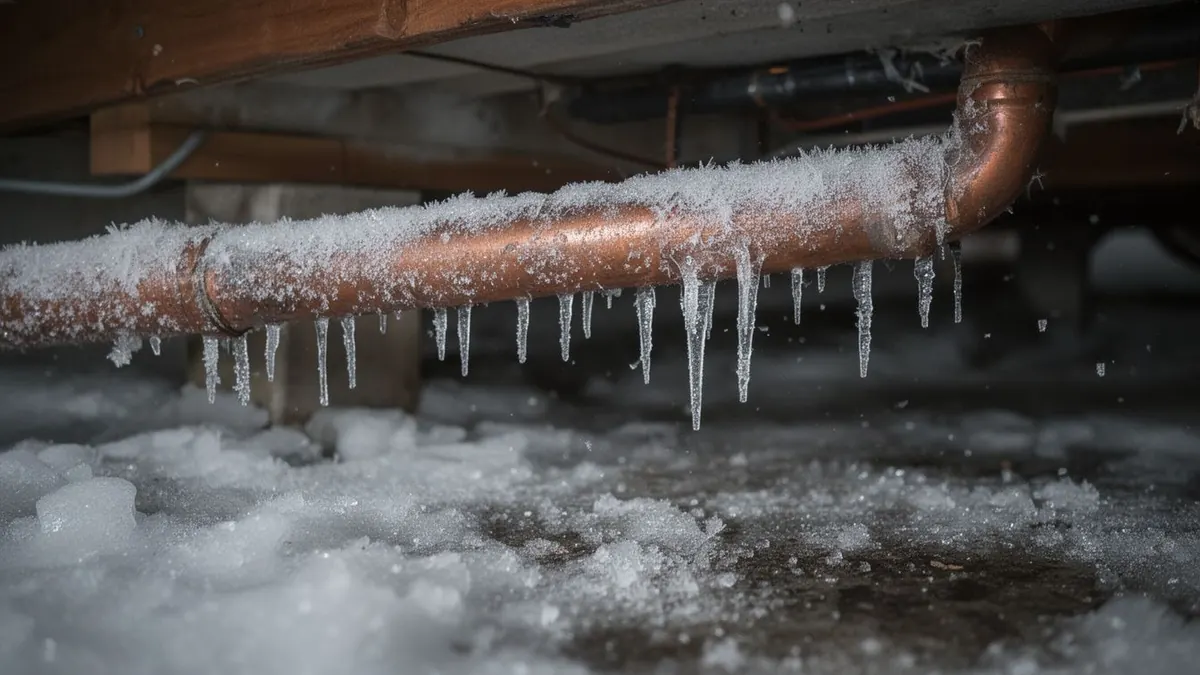
Front Range cold snaps can arrive fast and bring temperatures well below zero. A little preparation in the fall prevents most frozen and burst pipes.
In the fall
- Disconnect garden hoses and drain outdoor faucets (hose bibs). A connected hose can trap water and freeze even "frost-proof" hose bibs.
- Blow out the sprinkler system before the first hard freeze.
- Shut off and drain any outdoor water lines with an interior shutoff.
- Insulate exposed pipes in crawl spaces, garages, attics and unheated basements with foam pipe sleeves.
- Seal gaps where cold air reaches pipes: rim joists, foundation vents, around pipe penetrations.
- Know where your main shutoff valve is — and make sure it turns.
Before and during a cold snap
- Keep the thermostat steady, day and night — don't drop it sharply overnight.
- Open cabinet doors under sinks on exterior walls.
- Let at-risk faucets drip (hot and cold) during the coldest nights.
- Keep the garage door closed if water lines run through the garage.
- Use heat tape (UL-listed, installed per instructions) on pipes that freeze repeatedly.
When you travel in winter
- Keep the heat on — at least about 55°F.
- Ask someone to check the house during cold snaps.
- For longer trips, consider shutting off the main water and draining the lines.
- Consider smart leak sensors or an automatic shutoff valve.
Pipes that freeze every year
If the same pipe freezes repeatedly, a plumber can reroute it to a warmer location, add insulation or install a frost-proof hose bib. See frozen and burst pipe repair.
Frequently asked questions
What temperature should I keep my house to prevent frozen pipes?
Keeping the thermostat at about 55°F or higher is commonly recommended, even when you're away.
Does dripping faucets really help?
Yes. Moving water is less likely to freeze, and an open faucet relieves pressure if ice forms.
Do frost-proof hose bibs ever freeze?
They're designed to resist freezing, but only if the hose is disconnected so the water can drain.