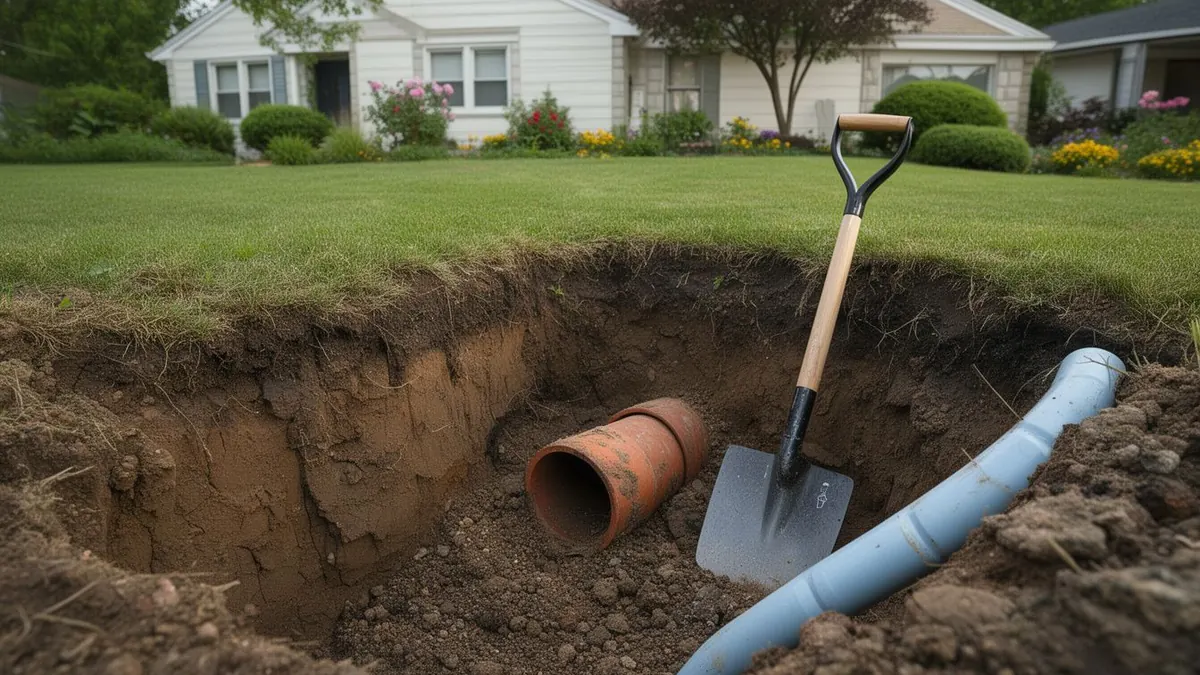
Your sewer line (lateral) carries everything from the house to the city main. When it's cracked, sagging, root-filled or collapsed, you get slow drains, gurgling, backups and sometimes soggy spots in the yard. In many Front Range cities, the homeowner is responsible for the sewer line from the house to the main.
Signs of a sewer line problem
- Several drains slow or backing up at the same time
- Water coming up in a floor drain, tub or shower when you run the washer or flush
- Gurgling toilets
- Sewage odor indoors or in the yard
- Lush or soggy patches of lawn over the line
- Recurring main line clogs
More detail: signs of sewer line problems.
Why sewer lines fail on the Front Range
- Older pipe materials in pre-1960s homes — clay (vitrified clay) and cast iron — crack, separate at joints and let roots in.
- Expansive clay soils along the Front Range swell and shrink with moisture and can shift or break buried pipes.
- Tree roots seek out moisture at joints and cracks.
- Bellies (sags) where soil has settled, causing waste to collect.
Repair options
| Method | How it works | Typical cost |
|---|---|---|
| Spot repair | Dig and replace one damaged section | Depends on depth and access |
| Dig and replace | Excavate and replace the line | About $50 – $250 per foot |
| Pipe lining (CIPP) | Cure a new liner inside the old pipe | About $80 – $250 per foot |
| Pipe bursting | Pull a new pipe through, breaking the old one | About $60 – $200 per foot |
Ranges from 2026 national cost guides. Digging under driveways, sidewalks or streets, permits and landscape repair add cost. See sewer line replacement cost.
Start with a camera inspection
A sewer camera inspection shows the exact problem and location, so you aren't paying to replace a whole line when a spot repair would do — or patching a line that really needs replacement.
Frequently asked questions
Who is responsible for the sewer line in Colorado?
In many Front Range cities, the homeowner owns and maintains the line from the house to the public main, sometimes including the section under the street. Check with your city or sewer district.
Is trenchless sewer replacement worth it?
Trenchless methods often cost similar per foot but avoid tearing up driveways, trees and landscaping, which can make the total project less disruptive.
Does homeowners insurance cover sewer line replacement?
Standard policies often exclude wear, tear and root damage. Some insurers sell a service line endorsement — check your policy.