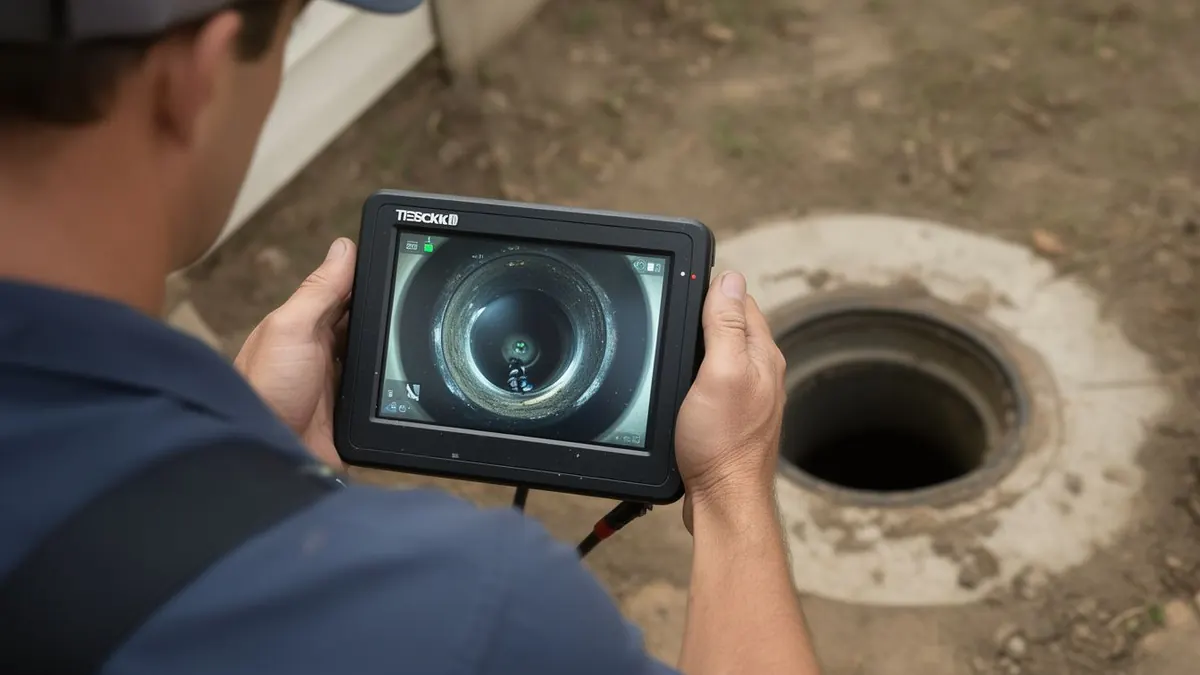
A sewer camera inspection (sewer scope) sends a waterproof camera through your drain line to show exactly what's inside: roots, cracks, offsets, sags, scale or a collapse — and how far from the house it is. It's the step that keeps you from guessing on expensive repairs.
When to get a sewer camera inspection
- Recurring clogs or backups in the main line
- Before buying an older home — many pre-1960s Front Range homes have clay or cast iron laterals
- After hydro jetting, to confirm the line is clean and intact
- Before landscaping or a driveway project over the sewer line
- Sewage odors or soggy spots in the yard
What it shows
| Finding | What it means |
|---|---|
| Root intrusion | Roots entering through joints or cracks; may need cleaning plus repair |
| Offset or separated joint | Pipe sections shifted, often from soil movement |
| Belly (sag) | Low spot where waste collects and clogs recur |
| Cracks or broken pipe | May need spot repair, lining or replacement |
| Scale or corrosion | Common in cast iron; may respond to jetting or descaling |
| Collapse | Requires repair or replacement |
What it costs
A camera inspection typically costs about $125–$500, depending on access (an exterior cleanout makes it easier), line length and whether a written report and video are included. Some plumbers credit part of the cost toward repair work.
Get the recording
Ask for the video and the location/depth of any defects. That lets you get a second opinion and compare repair options like spot repair, lining or replacement.
Frequently asked questions
Should I get a sewer scope before buying a house in Colorado?
For older homes especially, many buyers do, because sewer line repairs can cost thousands and aren't always covered by home inspections.
How long does a sewer camera inspection take?
Usually about 30 minutes to an hour, depending on access and the length of the line.
Can a camera inspection be done if the line is clogged?
Often the plumber clears the clog first, then runs the camera to see what caused it.