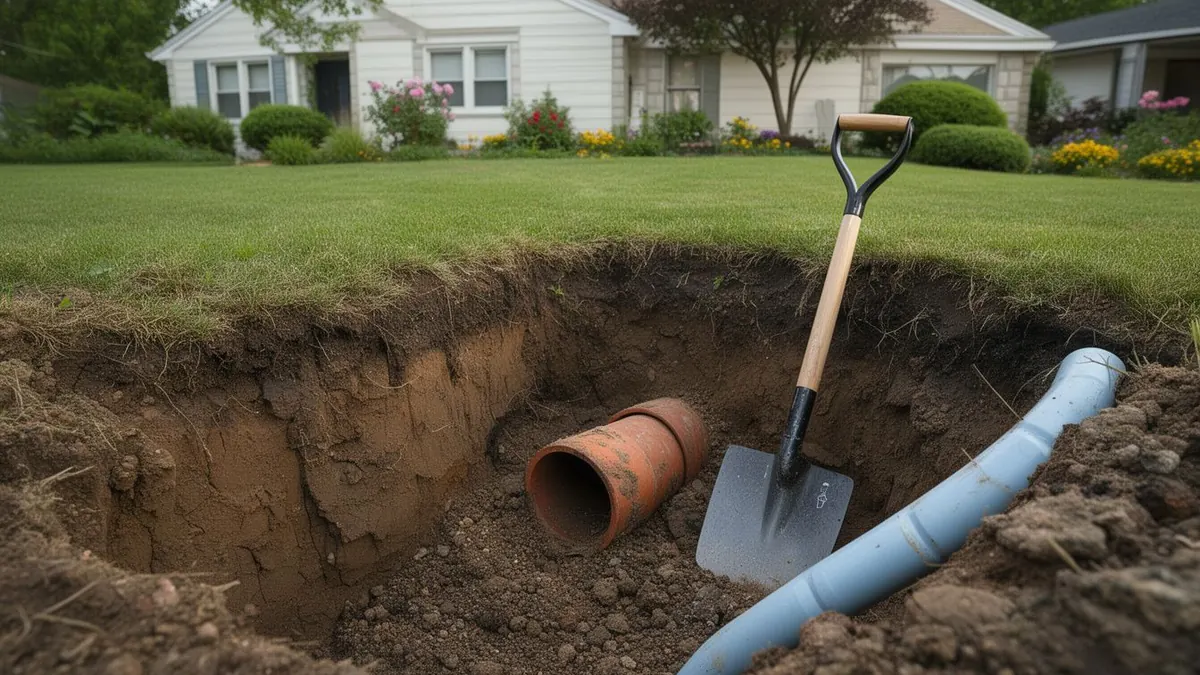
The sewer line from your house to the city main is out of sight until it causes a problem. These are the signs that the issue is in the main line rather than a single drain.
1. Several drains are slow at once
One slow sink is a local clog. Tubs, toilets and sinks all draining slowly points to the main line.
2. Water backs up in a floor drain or tub
If running the washer or flushing pushes water up a basement floor drain or into a tub, the line downstream is blocked. Stop using water and call a plumber.
3. Gurgling toilets
Air bubbling up through a toilet when other fixtures drain signals a restriction in the main line or a venting problem.
4. Sewage odors
Smells indoors near drains or outside over the sewer line can mean a crack or a dry trap.
5. Soggy or extra-green lawn patches
Leaking sewage fertilizes the grass and softens the soil above the line.
6. Recurring clogs
If the main line needs clearing every few months, roots, a sag or a break are likely.
7. Foundation or slab cracks
Long-term leaks can wash out soil — and on the Front Range, expansive clay soils can shift pipes and foundations.
8. Your home is older
Many pre-1960s homes in Denver and older Front Range neighborhoods still have clay or cast iron sewer laterals, which crack and let roots in with age.
What to do next
- Limit water use if anything is backing up.
- Have the line cleared — see drain cleaning.
- Get a sewer camera inspection to see the cause.
- Compare repair options and costs — sewer line repair and sewer line replacement cost.
Frequently asked questions
Can tree roots really break sewer pipes?
Roots grow into joints and small cracks seeking moisture, then widen them and trap debris, causing clogs and breaks.
Is a sewer backup covered by insurance?
Standard policies often need a separate sewer backup endorsement. Check your coverage.
How do I find my sewer cleanout?
It's usually a capped pipe in the basement near the main drain or outside near the foundation. A plumber can locate or install one.