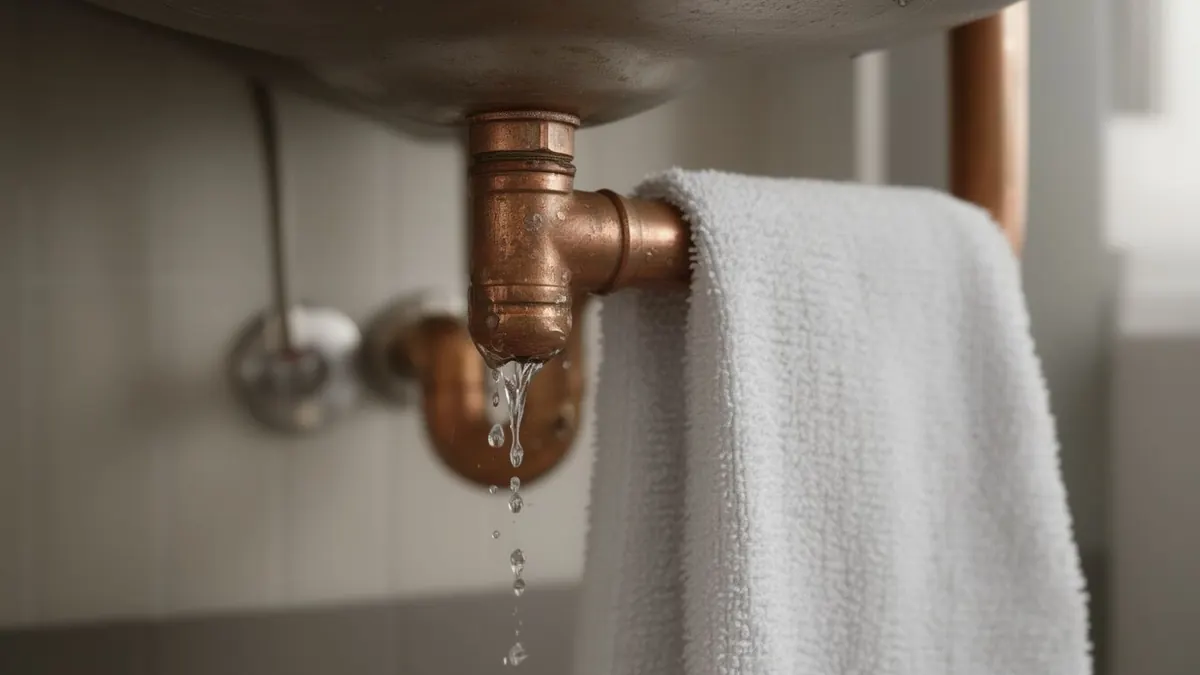
A slab leak is a leak in a water or drain line under a home's concrete slab. It can go unnoticed for a long time, quietly raising your water bill and damaging floors and the foundation.
Signs of a slab leak
- Warm or hot spots on the floor (a hot water line leak)
- Water bill increases without a change in usage
- Sound of running water with everything off
- Damp carpet, warped wood or lifting tile
- Mildew smell or mold near baseboards
- Cracks in flooring or walls, or water pooling outside near the foundation
- Water heater running constantly (a hot water leak keeps it refilling)
Confirm it with the meter test
Turn off all water use, note the meter reading, and check again after 30–60 minutes. Movement means a leak somewhere — a plumber can pinpoint whether it's under the slab. See leak detection.
Repair options
| Option | When it's used | Typical cost |
|---|---|---|
| Spot repair through the slab | Single leak, accessible location | Often part of $630 – $4,400 |
| Reroute the line | Leak hard to reach, or old pipes | $600 – $4,000 |
| Repipe | Multiple leaks or aging pipes | Higher; depends on the home |
Leak detection itself typically costs $150–$600. Flooring and drywall repairs are separate.
Why slab leaks happen
Corrosion of older pipes, abrasion where pipes rub against concrete, poor installation and soil movement — including the expansive clay soils found along the Front Range — are common causes.
Frequently asked questions
How urgent is a slab leak?
Address it promptly. A continuous leak can damage flooring, encourage mold and affect the foundation over time.
Can I keep using water with a slab leak?
If it's a small leak you may need to until repairs, but shut off the main if water is surfacing or spreading.
Is rerouting better than breaking the slab?
Often, yes — rerouting avoids jackhammering floors and can replace an aging line at the same time. A plumber will compare both.