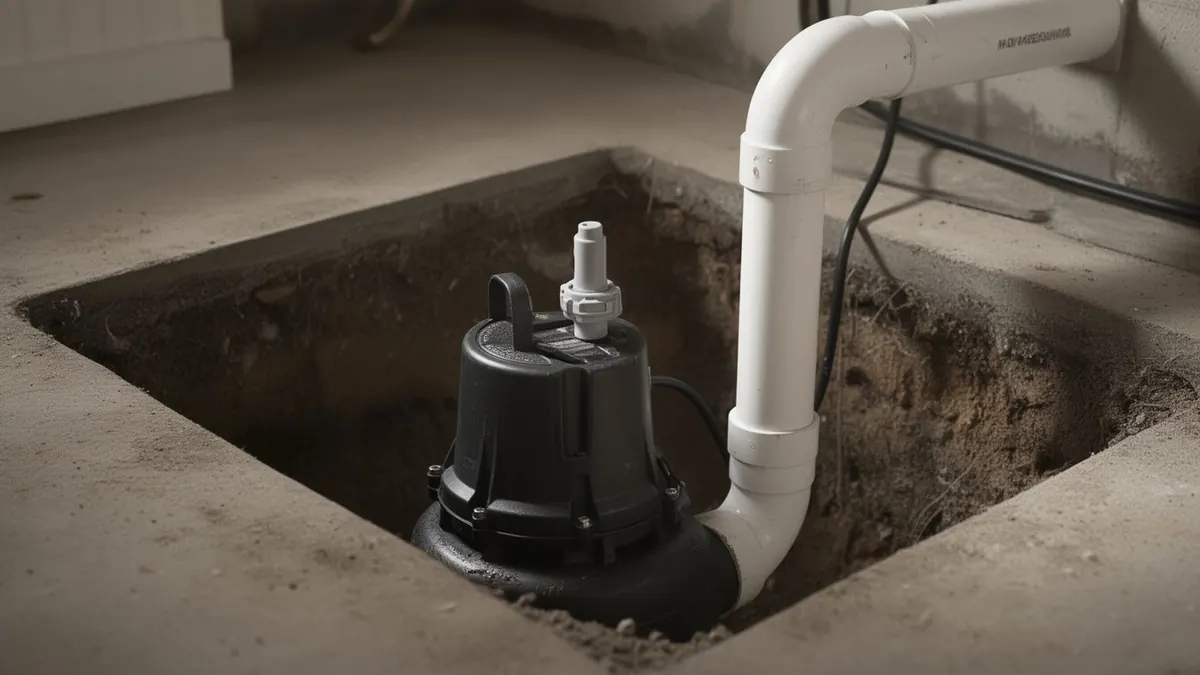
A sump pump only matters when water is rising — so a failure is easy to miss until the basement floods. These checks help you find the problem fast.
Pump doesn't turn on
- Check power: is it plugged in? Has the GFCI outlet or breaker tripped?
- Lift the float gently: if the pump starts, the float was stuck on debris or the pit wall.
- Clean the pit of dirt, gravel and debris around the pump.
- Still silent? The switch or motor has likely failed.
Pump runs but doesn't remove water
- Clogged inlet screen — clean it (unplug first).
- Failed check valve — water flows back into the pit after each cycle.
- Frozen or clogged discharge line — common in Colorado winters when the line runs across the yard.
- Impeller damage or a pump too small for the inflow.
Pump runs constantly or cycles rapidly
- Stuck float switch in the "on" position
- Check valve letting water return to the pit
- High water table after heavy snowmelt or storms
- Pit too small, causing short cycling
Humming but not pumping
Often a jammed impeller or a failing motor. Unplug it before checking for debris.
Winter tip: frozen discharge lines
If the discharge line freezes, the pump can run without moving water and burn out. Make sure the line slopes so it drains, add a freeze-protection outlet near the house, and route it away from the foundation.
When to call a plumber
- Water is rising and the pump isn't keeping up
- The pump is 10+ years old or the motor has failed
- You want a battery backup pump installed
See sump pump repair and replacement. Replacement typically costs $645–$2,100.
Frequently asked questions
How do I test my sump pump?
Pour a bucket of water into the pit until the float rises. The pump should start, empty the pit and shut off.
How often should a sump pump run?
It depends on groundwater. During snowmelt or storms it may cycle often; in dry periods it may rarely run.
What does a sump pump check valve do?
It stops pumped water from flowing back into the pit, so the pump doesn't re-pump the same water.